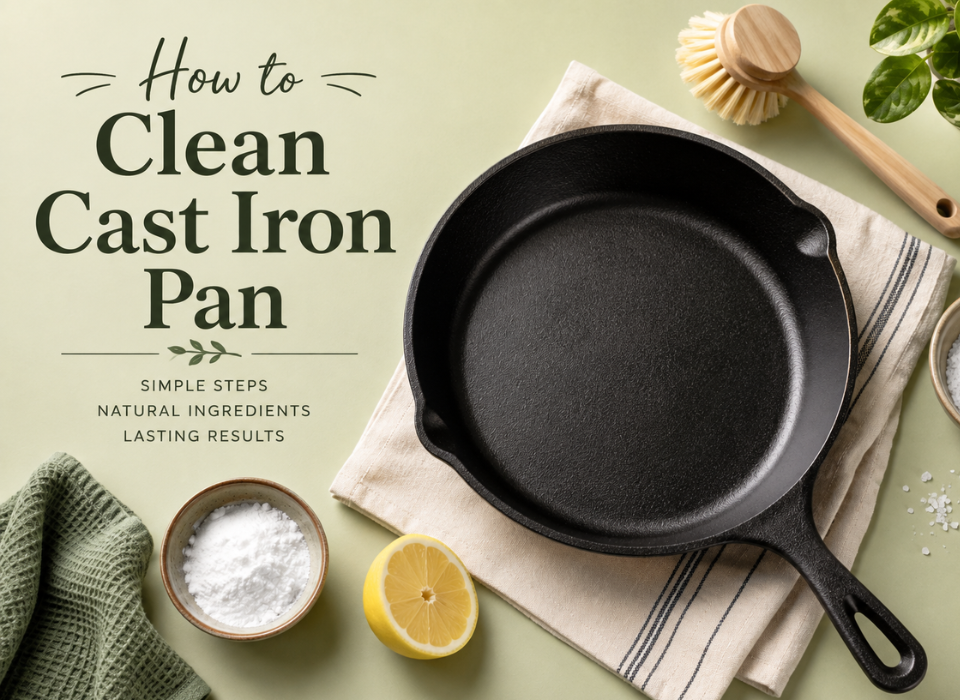
Ask five people how to clean a cast iron pan and you’ll probably get five different answers.
“Never use soap. Only use salt. Don’t let water touch it.”
Sound familiar?
The truth is, cast iron isn’t nearly as high maintenance as people make it out to be. Once you understand what you’re trying to protect, cleaning it becomes surprisingly simple.
In this guide, I’ll show you exactly how to clean cast iron pan after every use and which cast iron myths you can finally stop worrying about.
Disclaimer: This post is based on personal experience and research. Some links may be affiliate links, meaning I may earn a small commission at no extra cost to you.
As an Amazon Associate, we earn from qualifying purchases.
Why Cleaning Cast Iron Is Different
Here’s the one thing worth understanding, because it explains everything else in this post.
Your cast-iron pan’s non-stick surface isn’t a coating that was sprayed on at the factory. It’s a layer of oil that’s been baked on so many times that it’s chemically bonded to the iron underneath called seasoning.
And this is why I switched from non-stick cookware to cast iron cookware. It’s what makes eggs slide around like they would in a non-stick pan and it’s what’s quietly protecting the iron from rust.
Only two things really put that layer at risk:
Leaving it wet for too long. Iron and water don’t get along. If you leave your cast iron pan wet for too long- it will start rusting.
Hot pan, cold water. Dunk a screaming-hot skillet into cold water and you risk warping it, or causing the seasoning to lift right off the surface.
How to Clean a Cast Iron Skillet After Every Cook
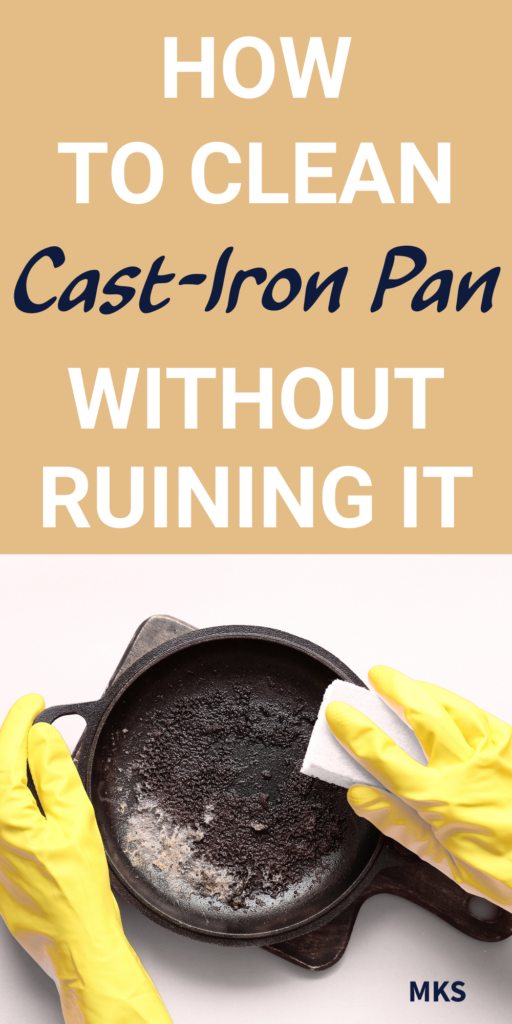
The daily cleaning routine takes about 3 minutes and follows the same sequence every time.
Step 1: Clean while still warm, not hot
Clean your cast iron skillet while it’s still warm from cooking, not scalding hot, but warm to the touch.
Food releases more easily from a warm surface than a cold one, and you avoid the risk of thermal shock from adding water to a very hot pan.
If you’ve just finished cooking and the pan is extremely hot, let it rest for 5-10 minutes before cleaning.
Step 2 : Hot water and a stiff brush for most cleaning
For most everyday cooking like eggs, vegetables, seared meat, pan sauces use hot water and a stiff non-metal brush. It’ll removes everything without any soap needed.
A Lodge cast iron brush, a nylon-bristle brush, or a stiff silicone scrubber all work well. Avoid fine-bristle soft brushes that won’t shift stuck food.
Step 3 : Food Won’t Budge? Try This
Stuck food that doesn’t shift with brushing responds well to one of two methods:
Coarse salt: Pour a tablespoon of coarse kosher or sea salt into the pan with a small amount of warm water. Scrub with a paper towel or cloth — the salt acts as a gentle abrasive that removes stuck food without touching the seasoning layer. Rinse and dry.
Chainmail scrubber: A stainless steel chainmail scrubber (specifically designed for cast iron) is the most effective tool for stubborn stuck food. It removes debris efficiently without the abrasive damage of steel wool. Not essential for everyday cleaning, but useful to own.
Boiling water method: For very stubborn stuck food, add a cup of water to the pan and place it on the stovetop over medium heat. As the water heats, the stuck food loosens. Scrape gently with a wooden or silicone spatula, discard the water, and clean normally.
Check this post on how to cook safely using cast-iron cookware.
Step 4 : Dry it properly, straight away
This step is non-negotiable. After washing, dry your cast iron immediately with a cloth or paper towel then place it on the stovetop over medium-low heat for 2-3 minutes to evaporate any remaining moisture.
You’re looking for no visible moisture and no steam rising from the surface. Even a small amount of trapped moisture can initiate rust, particularly if the pan is stored somewhere damp.
Step 5 : Apply a thin maintenance oil layer
While the pan is still warm from the stovetop drying step, apply a tiny amount of oil, canola, mustard, grapeseed or vegetable with a paper towel and wipe it almost completely off. The goal is a barely-there film, not a visible coat.
This 30-second step after every cook is what keeps the seasoning building.
The Soap Question : Settled Once and For All
Soap is fine on cast iron. This needs saying clearly because the no-soap myth is so persistent.
The old warning against soap dates from when dish soap contained lye, a caustic alkali that strips oil from surfaces aggressively.
Modern dish soap is a far milder formulation and will not strip properly polymerised cast iron seasoning with normal use.
America’s Test Kitchen after testing hundreds of cast iron skillets concluded the same: occasional soap use doesn’t damage established seasoning. Lodge, the most respected cast iron manufacturer in the US, confirmed in their official cleaning guidance that a small amount of mild soap is acceptable.
What You Should NEVER Do to Cast Iron
These genuinely damage the pan unlike the soap myth:
Never put cast iron in the dishwasher. The sustained hot water, steam, and harsh detergent of a dishwasher cycle will strip seasoning completely and likely rust the pan. No cast iron, ever, in a dishwasher.
Never soak in water. Leaving cast iron submerged or soaking in water even briefly is how rust develops. Wash and dry immediately.
Never place a very hot pan in cold water. Thermal shock can crack or warp cast iron and can cause seasoning to separate from the surface. Let the pan cool slightly, or add warm water rather than cold.
Never use steel wool for regular cleaning. Steel wool is abrasive enough to strip seasoning. It has a legitimate use for rust removal (see below) — but it’s not a routine cleaning tool. Use a brush or chainmail scrubber instead.
Never air dry. Leaving cast iron to air dry invites rust. Always dry actively with a cloth first, then briefly on the stovetop.
My Recommendation
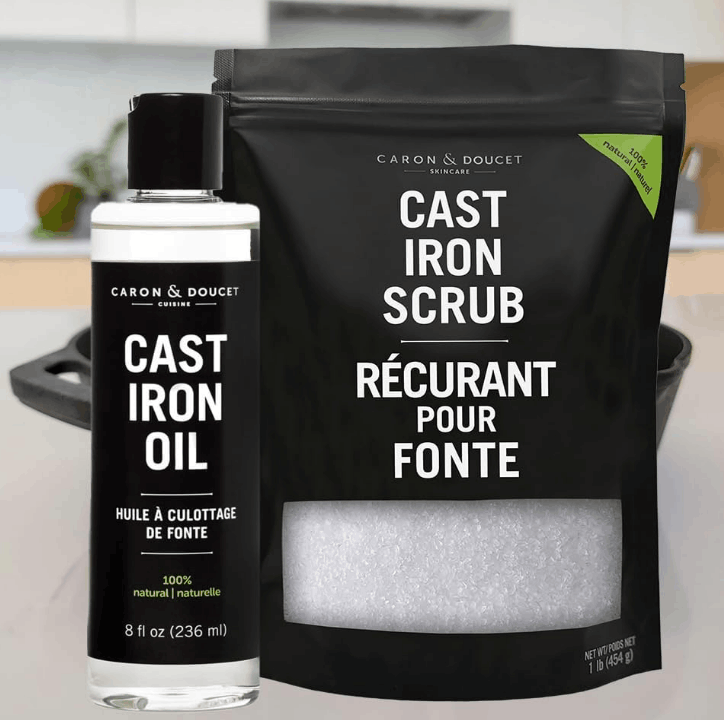
If you’ve noticed orange rust on your pan, don’t worry—it’s usually fixable. Here’s exactly how to clean rust off cast iron. How to Clean a Rusty Cast Iron Skillet ? Bringing a Neglected Pan Back to Life. If that’s the situation you’re in, that’s your next stop.
Storing Cast Iron Properly
PA little care in the cupboard saves you a lot of hassle later.
Always store it bone dry. Never tuck away a pan with even a trace of dampness.
Slip a paper towel inside. It soaks up any stray humidity so moisture never sits against the cooking surface.
Keep heavy things off the cooking surface. If you’re stacking pans, a paper towel or cloth between them protects the seasoning from scratches.
Skip the tight lid in a damp kitchen. Trapped humidity is not your pan’s friend.
Quick Reference : How to Clean Cast Iron Pan
After every cook:
- Clean while warm with hot water and a stiff brush
- Coarse salt or chainmail for stuck food
- Dry immediately – cloth then stovetop heat
- Thin oil layer while still warm
Never:
- Dishwasher
- Soaking in water
- Cold water on a very hot pan
- Air drying
- Steel wool for routine cleaning
The Bottom Line
Cast iron cleaning is straightforward once you understand what you’re protecting — the polymerised oil layer that makes the pan non-stick and rust-resistant.
The genuine risks are prolonged moisture and thermal shock. The myths — primarily the no-soap rule — are safe to ignore.
Clean while warm, dry immediately, apply a thin maintenance oil layer, and your cast iron will outlast you. If rust does appear, it’s not the end — it’s a 20-minute restoration job.
Ready to understand how to build and rebuild that seasoning layer when needed? Read this next: How to re-season cast iron cookware?
Sources
A note on sources for this post: cast iron cleaning guidance does not have a body of peer-reviewed scientific studies behind it the way PFAS health effects do. The most authoritative sources for this topic are the manufacturer (Lodge) and independent product testing organisations (America’s Test Kitchen). Both are clearly identified below. The iron corrosion science cited is from established chemistry.
Manufacturer guidance — primary source:
- Lodge Cast Iron — How to Clean (official manufacturer guidance) The most authoritative source on caring for Lodge cast iron. Confirms mild soap is acceptable, provides official rust restoration steps. https://www.lodgecastiron.com/pages/how-to-clean
- Lodge Cast Iron — How to Restore and Season a Rusty Cast Iron Skillet Official Lodge rust restoration protocol including steel wool, wash, dry, and re-season sequence. https://www.lodgecastiron.com/pages/cleaning-and-care-cast-iron-restore-and-season-rusty-cast-iron
Independent product testing:
- America’s Test Kitchen — What I Know About Cleaning and Seasoning Cast-Iron Skillets (March 2025) Professional test kitchen. Physical testing of hundreds of cast iron pans over years. Their conclusions on soap safety and cleaning methods are based on observed results from systematic testing — not peer-reviewed science, but rigorous independent product evaluation. https://www.americastestkitchen.com/articles/3615-how-to-clean-and-season-cast-iron-skillets
Iron corrosion chemistry:
- PBS NOVA — What happens when you season a cast iron pan (August 2022) Explains the electrochemical basis for iron oxidation (rust) and how the polymer seasoning layer prevents it by sealing the iron surface from air and moisture. https://www.pbs.org/wgbh/nova/article/season-cast-iron-skillet-polymerization/
- ScienceOfCooking.com — Science of Cast Iron Skillet Cooking References peer-reviewed chemistry on iron corrosion, the role of moisture in rust formation, and why immediate drying after washing is essential. https://www.scienceofcooking.com/science-of-cast-iron-skillet-cooking.html