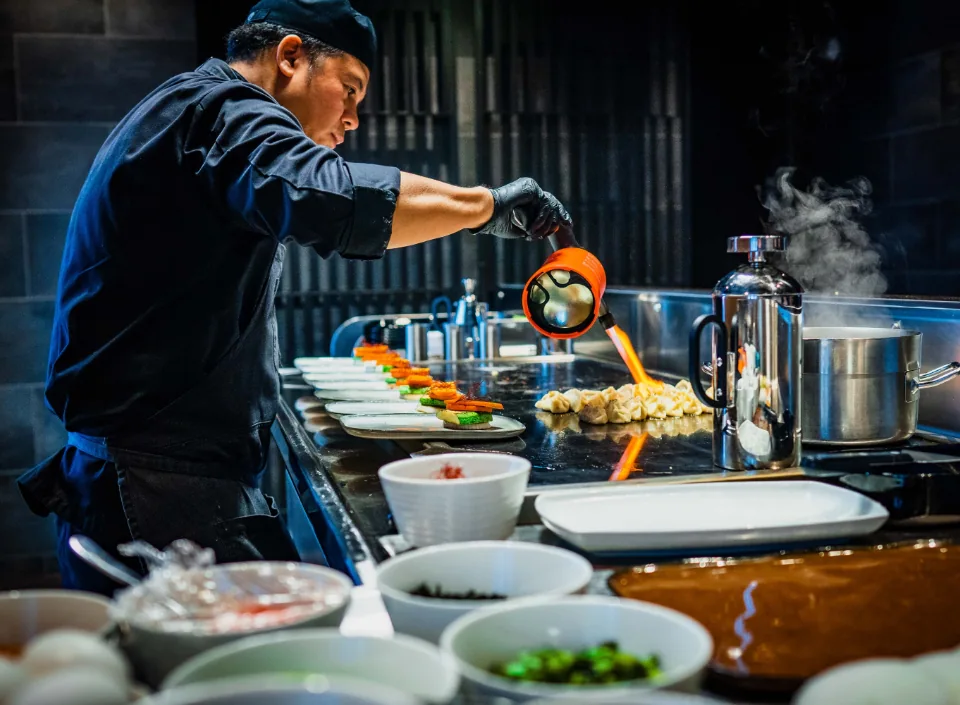
“What Is the Safest Cookware” is one of the most searched questions in the non-toxic kitchen space and it deserves a genuinely honest answer, not a product recommendation list dressed up as science.
The truthful answer is: there is no single “safest” cookware material for every person in every kitchen. What matters is understanding what the risks actually are for each material and matching that to how you actually cook.
Here’s what independent research and government agencies say about each main cookware material and how to use that to make the right decision for your family.
Disclaimer: This post is based on personal experience and research. Some links may be affiliate links, meaning I may earn a small commission at no extra cost to you.
As an Amazon Associate, we earn from qualifying purchases.
The Core Safety Question for Any Cookware
When researchers and health agencies assess cookware safety, they look at two main things:
Chemical migration : does the material release any substances into food during cooking, and if so, what are those substances and at what levels?
Coating integrity : if the cookware has a surface coating, what happens to that coating when it’s scratched, overheated, or degraded with age?
These two questions cut across all cookware materials. A material with no coating at all (stainless steel, cast iron, glass) only has to answer the first question. A material with a coating (PTFE non-stick, ceramic, enamel) has to answer both.
1. Stainless Steel : The Most Versatile Safe Option
If I had to recommend one cookware material that suits almost every kitchen, stainless steel would be at the top of the list.
Stainless steel has no coating of any kind, eliminating the coating integrity question entirely. The US EPA lists it as a safe cookware material with no PFAS or forever chemical concerns.
Grade matters: 18/10 stainless steel (18% chromium, 10% nickel) is the most common food-grade standard and is widely considered safe.
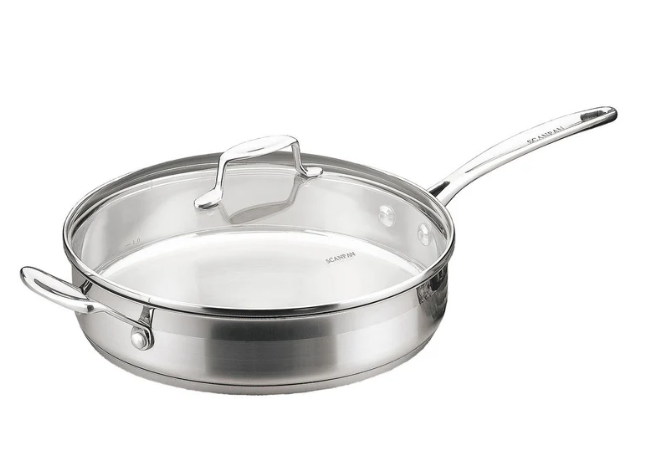
When I switched away from non-stick, I bought Scanpan’s 18/10 stainless steel pots and pans. I absolutely love cooking with them. They’re well made, easy to care for, and I genuinely feel they’ve been worth every dollar.
Nickel-free stainless steel (18/0) cookware is also available for those with nickel sensitivities. Look for brands that explicitly confirm nickel-free alloy composition.
Best for: everyday cooking, searing, sautéing, boiling versatile across almost all cooking tasks.
Some of the brands we recommend are Scanpan, Mauviel and cuisinart.
Just so you know, I’m not saying these are the only brands worth buying. They’re simply the ones I trust based on my own experience and research. The goal of this guide is to help you understand what to look for, so you can confidently choose the cookware that best fits your cooking style and budget.
2. Cast Iron : The Generational Investment
Cast iron has been around for generations, and for good reason. There’s no synthetic coating to worry about just solid iron that can last a lifetime.
Cast iron has no synthetic coating. No PFAS, no PTFE, no ceramic, no enamel. The material itself is the cooking surface.
This was one of the reasons I decided to buy my Lodge Cast Iron Skillet. At the time, I was severely iron deficient, and after reading that cast iron can contribute small amounts of iron to food, I thought it was a practical swap to make.
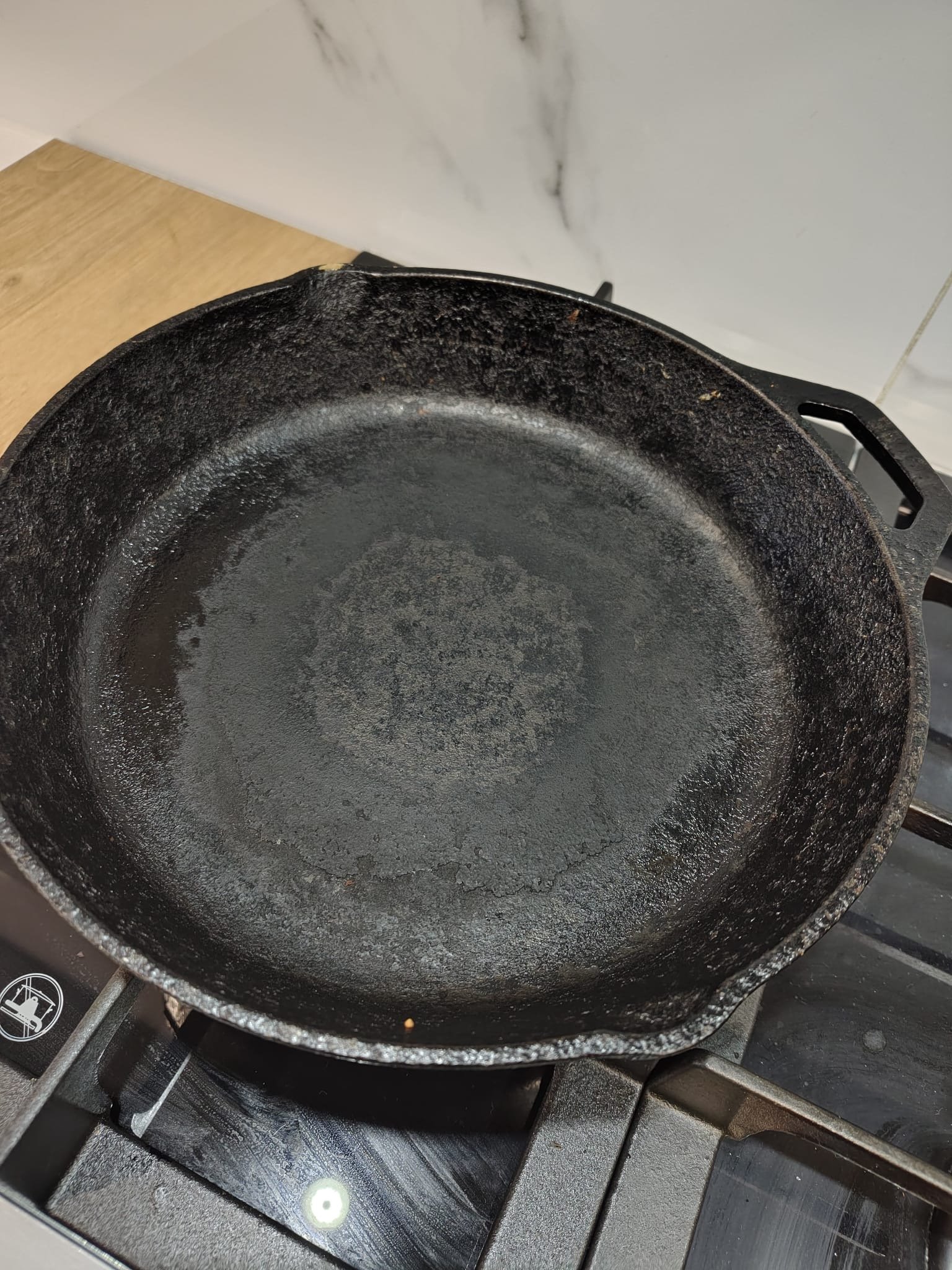
My Lodge cast Iron Pan
Text for This Block
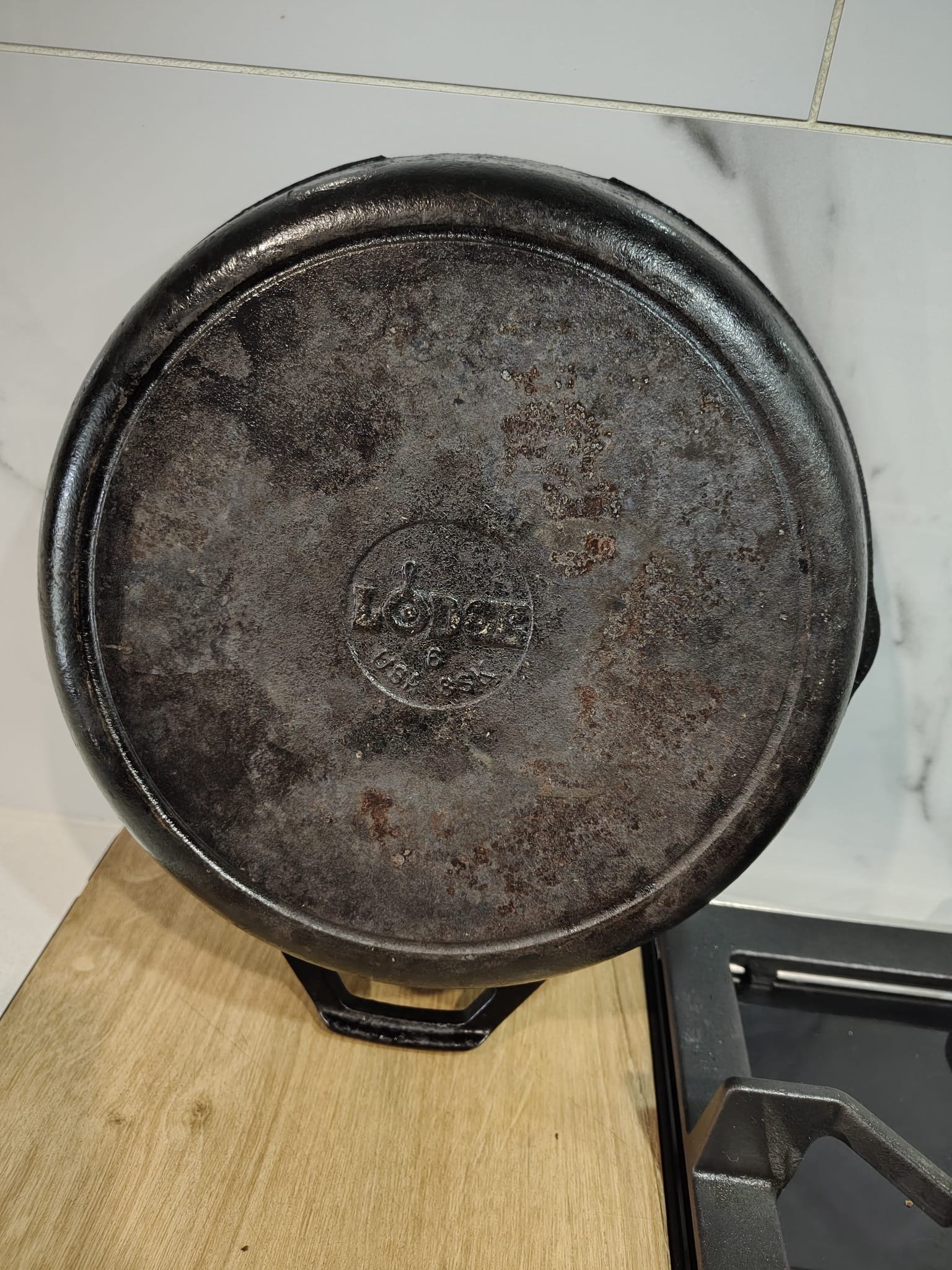
I’ll admit there was a bit of a learning curve. Cast iron is much heavier than a regular non-stick pan, and it takes a little time to get used to. But once you do, it’s incredibly easy to live with.
I never have to worry about scratching a coating or accidentally overheating it. A quick clean, a light coat of oil, and it’s ready for the next meal.
Performance note: Cast iron requires seasoning, a process of baking thin layers of oil into the surface to create a naturally non-stick coating. A well-seasoned pan performs excellently for most cooking tasks, including eggs, once the technique is understood. It improves with use rather than degrading.
Best for: high-heat cooking, searing, frying, baking, oven use. Also one of the most durable materials available, lasting generations with proper care
3. Enameled Cast Iron : Safe with Careful Use
If raw cast iron feels a little high maintenance, enameled cast iron offers many of the same benefits without the need for seasoning.
Enamel cast iron is coated with a durable, glass-like enamel that doesn’t rely on PFAS-based coatings or a synthetic non-stick coating. It’s also great for cooking acidic foods like tomato sauces and slow-cooked meals.
The main thing to know is that enamel can chip if it’s dropped or exposed to sudden temperature changes. While exposed cast iron isn’t a health concern, a chipped enamel surface isn’t designed to keep cooking with.
Most health agencies consider high-quality enameled cast iron safe to use. However, Mamavation, an independent consumer advocacy website, takes a more cautious view. It recommends choosing raw cast iron or naturally coating-free stainless steel instead because some enamel glazes may contain heavy metals.
Best for: Slow cooking, braises, soups, stews, and oven roasting.
Brands that I recommend are Le Creuset and Lodge
4. Carbon Steel : The Professional’s Choice
Safety profile: High – same considerations as cast iron
If you love the idea of cast iron but want something lighter, carbon steel is well worth considering. Made from iron and carbon, it develops a naturally non-stick surface through seasoning and doesn’t rely on PFAS-based coatings or any synthetic finish.
It heats up faster than cast iron, responds quickly to temperature changes, and is much easier to handle. That’s one of the reasons it’s a favourite in professional kitchens.
Like cast iron, it does need a little care. You’ll need to season it, avoid soaking it, and keep it out of the dishwasher. But once it’s well seasoned, you’ll have a durable pan that’s free from forever chemicals and built to last for years.
Best for: High-heat cooking, stir-fries, wok cooking, searing, omelettes, crêpes, and everyday cooking.
Some good brands are Matfer and Mauviel Black Carbon.
5. Ceramic Bakeware: A Safe Oven Staple
Quality ceramic bakeware is another excellent choice for oven cooking. Unlike ceramic-coated frying pans, solid ceramic baking dishes are naturally coating-free and don’t rely on PFAS-based coatings. When properly made, they’re considered a safe, durable option for everyday use.
The only thing to keep in mind is that quality matters. Some inexpensive ceramic products have been found to contain lead or cadmium in their glazes, so it’s worth buying from reputable brands that clearly state their products are food-safe and lead-free.
Before we continue, it’s worth clearing up a common point of confusion. Ceramic-coated cookware and ceramic bakeware are not the same thing. Ceramic-coated frying pans have a non-stick coating that gradually wears down over time, while solid ceramic baking dishes are made entirely from fired clay and don’t have a coating to wear away.
I’ll be honest, this was news to me too! Before researching cookware, I assumed ceramic bakeware and ceramic-coated cookware were the same thing. Turns out they’re completely different products, and understanding the difference makes choosing safer cookware much easier.
I love ceramic bakeware for dishes that go straight from the oven to the table. They hold heat beautifully and look just as good on the dining table as they do in the oven.
Best for: Casseroles, baked pasta, gratins, pies, roasting and oven-to-table meals.
Some of the brands we recommend are Emile Henry, Le Creuset Stoneware, CorningWare
6. Glass Bakeware – One of the Safest Options
I’d rank glass alongside stainless steel and cast iron.
Safety profile: High
Glass is one of the simplest cookware materials because it’s completely naturally coating-free. There’s no synthetic non-stick coating, it doesn’t rely on PFAS-based coatings, and it won’t react with acidic foods like tomatoes or citrus.
One thing many people don’t realise is that not all glass is the same. Borosilicate glass (used in older Pyrex and laboratory glassware) handles sudden temperature changes much better than tempered soda-lime glass, which is more common today.
No matter which type you have, a few simple habits will help it last for years: don’t put a cold dish into a hot oven, don’t place a hot dish on a cold surface, and don’t pour cold liquid into hot glass.
I use Pyrex glass baking dishes for lasagna, roasted vegetables and baking cakes because they’re easy to use and I never have to think about coatings.
Best for: Baking, roasting, casseroles, food storage and reheating.
7. Ceramic-Coated Cookware: Safe While the Coating Lasts
Safety profile: Medium as coating dependent, degrades over time
Certified PFAS-free ceramic cookware uses a silica-based mineral coating that contains no PTFE, PFOA, or other forever chemicals. For a family transitioning away from PTFE non-stick, it’s the closest like-for-like performance alternative.
Two honest limitations to know:
First, ceramic coatings degrade. A quality ceramic pan typically performs well for one to three years before the non-stick surface diminishes noticeably.
This is a performance issue rather than an ongoing safety concern. Degraded ceramic coating doesn’t present the same risks as a scratched PTFE coating but it does mean more frequent replacement.
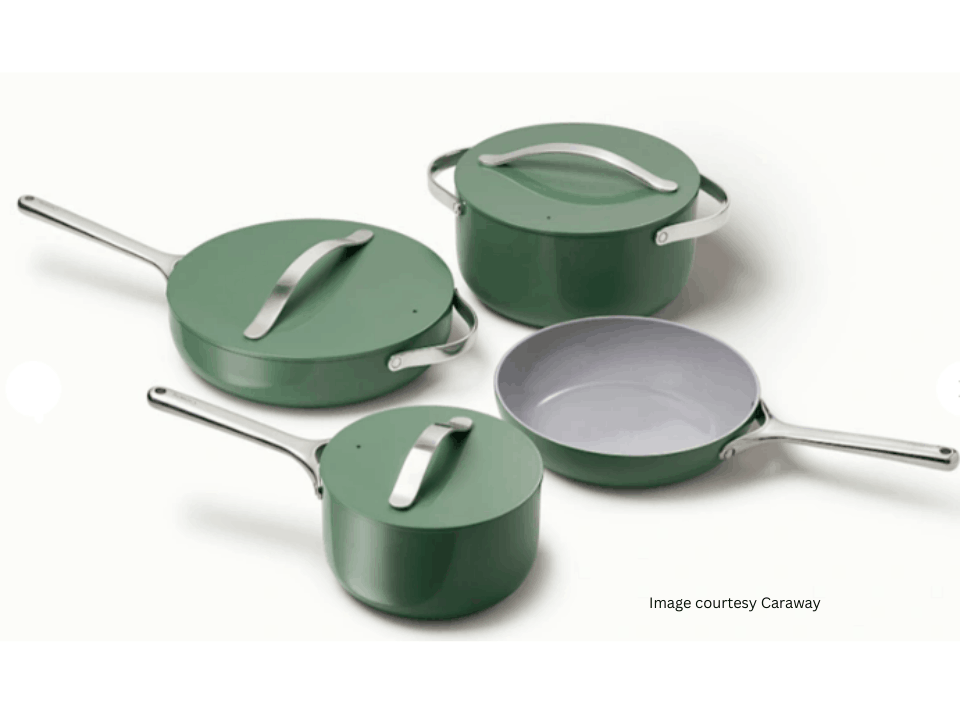
Second, “ceramic” is not a regulated term. Not all ceramic coatings are created equal. Some budget options have been found to contain lead or cadmium in the glaze.
Always look for explicit confirmation that the coating is lead-free and cadmium-free, alongside PFAS-free, PTFE-free, and PFOA-free.
Best for: everyday non-stick cooking, eggs, delicate fish, pancakes while the coating is intact
Some of the well known brands are Caraway, and GreenLife.
Here’s my honest safest cookware gift recommendation for housewarming party.
8. Traditional PTFE non-stick Cookware
Safety profile: Lower particularly when scratched or overheated
Traditional non-stick cookware gets its slippery surface from PTFE (polytetrafluoroethylene), a synthetic coating that belongs to the PFAS family of chemicals. When the coating is intact and used correctly, many health authorities consider it to pose a very low risk.
The problem is that real kitchens aren’t perfect.
Pans get scratched, forgotten on a hot stove, or overheated during everyday cooking. Research has shown that even a single scratch can release thousands of tiny plastic particles into food, while overheating can cause PTFE coatings to release airborne PFAS compounds.
With so many excellent alternatives now available including stainless steel, cast iron, carbon steel and quality ceramic-coated cookware, I believe traditional PTFE cookware is the first thing worth replacing as your kitchen evolves.
Best for: Replacing when practical, especially if the coating is scratched, peeling or worn.
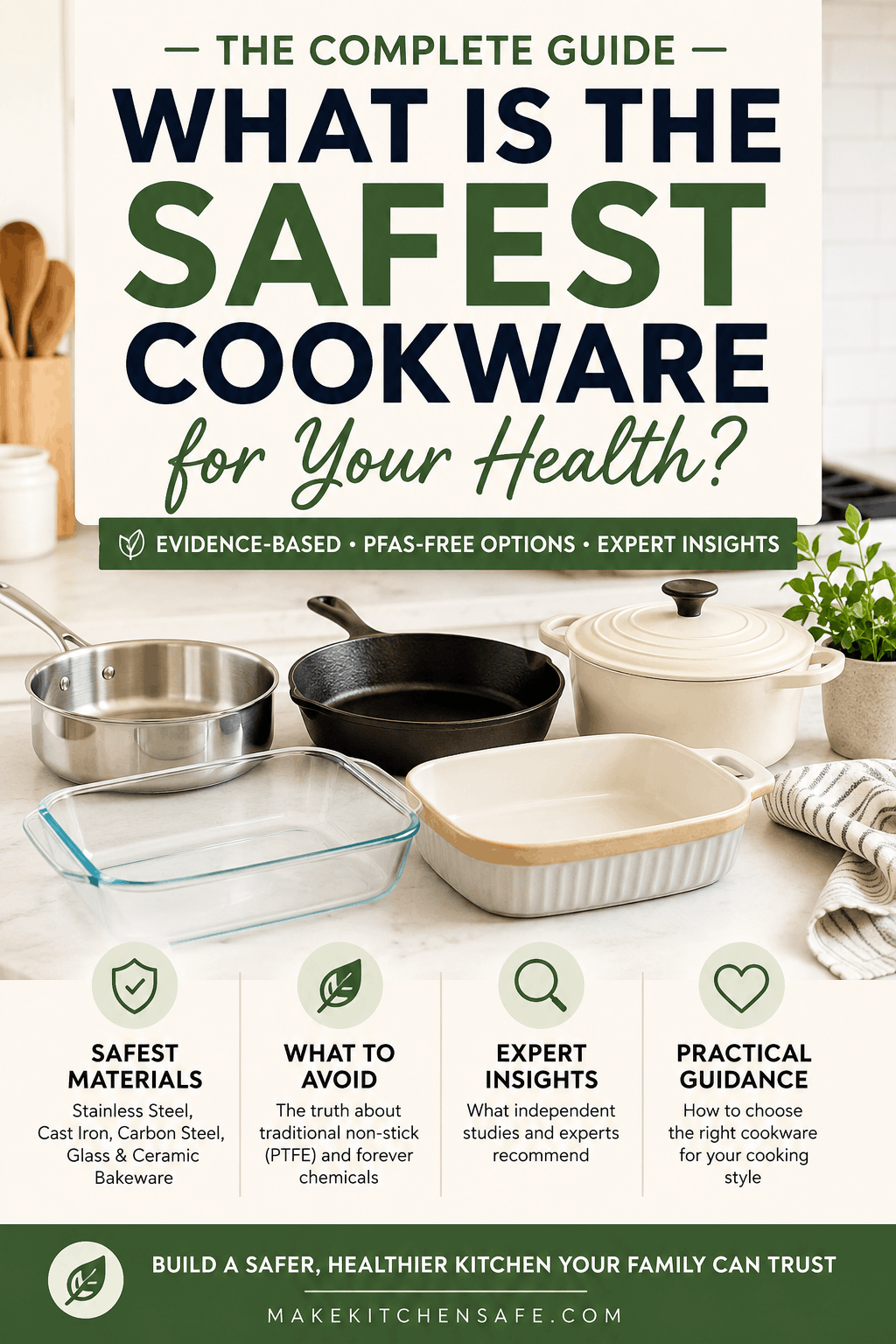
What Is the Safest Cookware for Your Health?
The “best” cookware really depends on how you cook.
- For everyday cooking: You can’t go wrong with 18/10 stainless steel. It’s durable, versatile and one of the easiest long-term investments you can make.
- For high-heat cooking or a naturally non-stick surface: Cast iron or carbon steel are excellent choices once seasoned.
- If you have a nickel sensitivity: Look for cast iron, carbon steel or 18/0 stainless steel.
- If you still want a non-stick pan: Choose a quality ceramic-coated cookware from a reputable brand that’s free from forever chemicals, and expect to replace it after a few years.
- For slow cooking and oven meals: Enameled cast iron, glass bakeware and quality ceramic bakeware are all fantastic options.
If you’re just getting started, don’t feel like you need to replace everything overnight. A good stainless steel pan and a cast iron or carbon steel pan will cover almost everything most home cooks need. That’s what I have too. Quality Ceramic bakeware is definitely on my wish list- one day certainly.
For the best non-toxic air fryer : check this post for the brands we found safe and what to avoid when buying non-toxic air fryer.
The Bottom Line
After weeks of researching cookware materials, one thing became very clear: there isn’t a single “perfect” pan. Every material has strengths and trade-offs.
For most families, stainless steel, cast iron, carbon steel, glass bakeware and quality ceramic bakeware offer the simplest path to a kitchen free from forever chemicals. They’re durable, proven, and don’t rely on PFAS-based coatings or a synthetic non-stick coating to do their job.
If you love cooking with non-stick, quality ceramic-coated cookware can be a sensible option. Just remember that the coating won’t last forever.
You don’t need to throw out your entire kitchen tomorrow. I certainly didn’t. Start with the pans you use most, replace them as they wear out, and build your kitchen one piece at a time.
The safest kitchen isn’t the one with the most expensive cookware. It’s the one where you understand what your cookware is made from and feel confident using it every day.
Already have non-stick pans and not sure whether to keep them? Read this next: How to tell if your pans have PFAS – 5 signs to check right now
Sources if you want to read further:
- NIH PMC — 2023 peer-reviewed study — Assessing Leaching of Potentially Hazardous Elements from Cookware during Cooking. Nickel and chromium migration from stainless steel; iron from cast iron; titanium and enamel showed insignificant leaching. https://www.ncbi.nlm.nih.gov/pmc/articles/PMC10386729/
- Flinders University — 2022 study — single scratch on PTFE pan releases ~9,100 microplastic particles Referenced via: https://www.natureworldnews.com/articles/54089/20221110/scratched-teflon-non-stick-pan-releases-9-100-microplastic-particles.htm
- ScienceDirect — 2024 peer-reviewed study — PTFE coatings emit gaseous PFAS when heated; degrade at high temperatures https://www.sciencedirect.com/science/article/pii/S0048969724027232
- Consumer Reports — recommends PTFE-free focus; stopped displaying PFOA-free in cookware ratings https://www.consumerreports.org/home-garden/cookware/best-frying-pans-if-you-want-to-avoid-pfas-chemicals-a1006253549/
- US EPA — PFAS health risks https://www.epa.gov/pfas/our-current-understanding-human-health-and-environmental-risks-pfas
- NIH — NIEHS — PFAS health effects https://www.niehs.nih.gov/health/topics/agents/pfc
- IARC — International Agency for Research on Cancer — PFOA classified as Group 1 carcinogen Referenced via: https://www.iarc.who.int/news-events/iarc-monographs-evaluate-the-carcinogenicity-of-perfluorooctanoic-acid-pfoa-and-perfluorooctanesulfonic-acid-pfos/
What a great post! I learned a lot! I feel good about what I have in the house ( a mix of stainless steel and cast iron). I shall pin in case I need to buy any cookware in the future.
Need more info out there like this. It’s insane how much PFAS there is everywhere. Stainless steel and carbon steel are my go-tos!
[…] But stainless steel is only one option. If you’re trying to work out which cookware is actually the safest for your kitchen, I break down the main materials here: What Is the Safest Cookware for Your Health? […]
[…] For a broader look at cookware materials including stainless steel, cast iron, carbon steel, ceramic and other options see What Is the Safest Cookware for Your Health? Honest Answer. […]