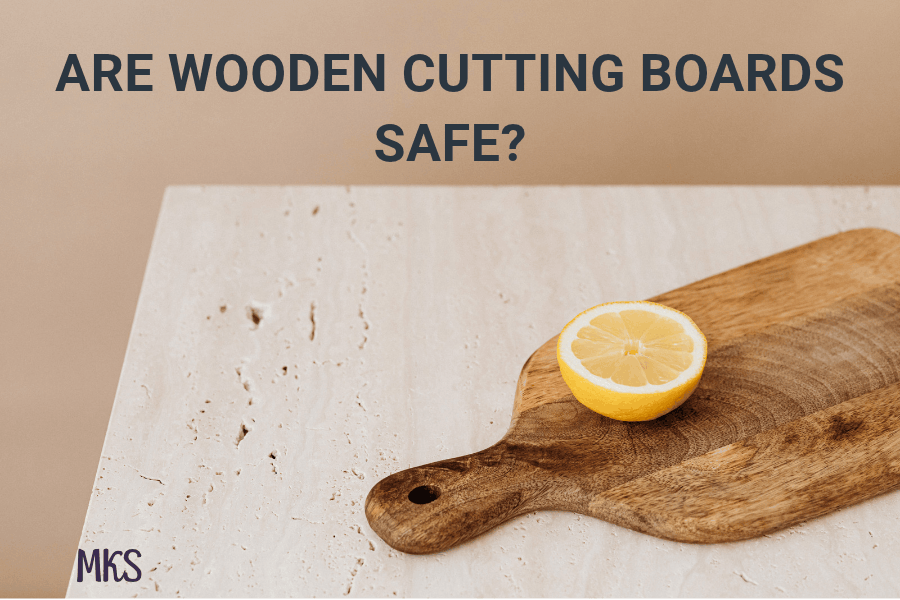
I used to have a couple of plastic chopping boards in my kitchen. Eventually, I got rid of them and bought wooden ones instead.
I felt better about that choice. I liked the look of wood, and I wasn’t particularly keen on the idea of tiny plastic particles being shaved off my chopping board every time I used a knife.
I bought an IKEA wooden chopping board, and more recently, my husband came home with another one from the supermarket.
But when I looked at the new board, something caught my eye. It was surprisingly shiny.
I remember seeing a similar board at Aldi, too. Was that shine simply the wood’s natural finish, or had something been applied to the surface? And if I’m choosing wood because I think it’s a better option than plastic, how do I know the board itself is safe?
That got me looking into what the research actually says.
Disclaimer: This post is based on personal experience and research. Some links may be affiliate links, meaning I may earn a small commission at no extra cost to you.
As an Amazon Associate, I earn from qualifying purchases.
Are Wooden Cutting Boards Safe?
The short answer is yes, wooden chopping boards can be safe to use. But there’s a little more to it than simply choosing wood over plastic.
For years, I’ve heard the argument that wood is porous and therefore holds bacteria, while plastic is easier to clean. It sounds logical enough. But when researchers began comparing the two materials, the results weren’t quite so straightforward.
A study published in 1994 found that bacteria were generally harder to recover from wooden boards than plastic ones under the conditions tested. Knife marks also made some plastic boards harder to clean.
A 2025 study of 100 cutting boards from Brazilian homes found bacteria on both materials. The researchers didn’t find a significant difference between wood and plastic in the detection of the specific pathogens they tested for.
So wood isn’t automatically unhygienic, but it isn’t magically self-cleaning either. Both materials need proper care..
What Is That Shiny Film on Wooden Chopping Boards?
This is the question that really got me thinking.
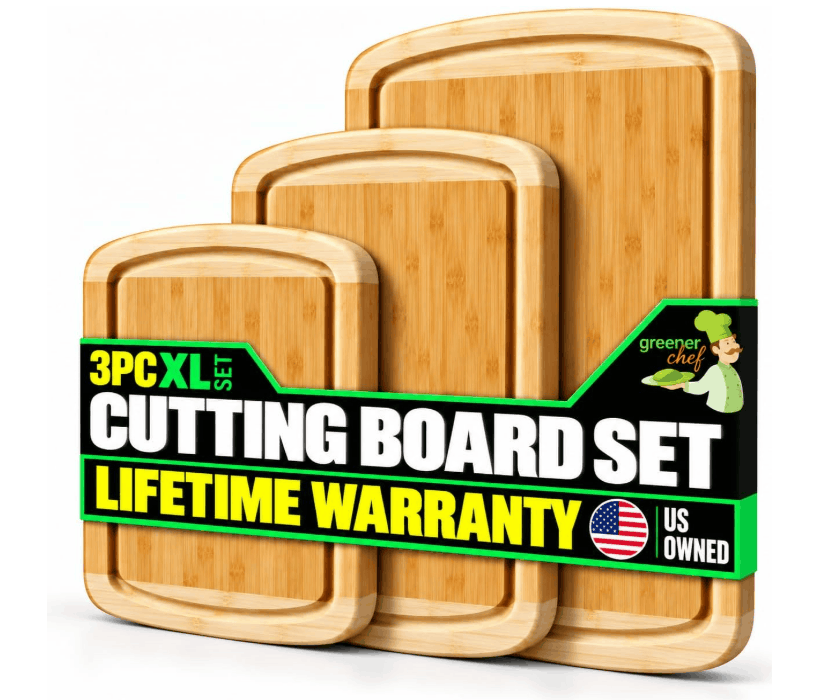
Some wooden boards have a natural, matte appearance, while others look almost glossy. It’s tempting to assume that shiny surface must be a chemical spray, but we can’t tell just by looking.
The finish could be an oil, wax or another coating used during manufacturing. Without information from the manufacturer, there’s no reliable way to identify it.
If I’m buying a wooden chopping board, I’d want to know what finish has been applied and whether it’s suitable for food contact. I’d also check the care instructions rather than assume every wooden board needs the same treatment.
I recently came across Kmart’s set of four wooden cutting boards with stand. The product is listed as rubber wood, but I couldn’t confirm the exact finish from the product information available to me.
I’d ask Kmart to clarify that before making assumptions about the coating.
The shine alone wouldn’t put me off a board, but I’d want confirmation that its finish is suitable for food preparation.
Are Wooden Cutting Boards Safer Than Plastic?
There are two things I consider here: hygiene and the material itself.
Wooden cutting boards
One thing that surprised me was that research doesn’t support the idea that wooden boards are automatically less hygienic than plastic. In a 1994 laboratory study, bacteria were generally harder to recover from wood than plastic under the conditions tested.
I also prefer the idea of not having plastic particles shed from my chopping surface. Research has shown that plastic cutting boards can release tiny particles during chopping, although we don’t yet know what that means for our health at typical levels of exposure.
A good wooden board can also last for years with proper care. The downside? It needs to be washed and dried properly, and it can crack, split or warp if it isn’t looked after.
Plastic cutting boards
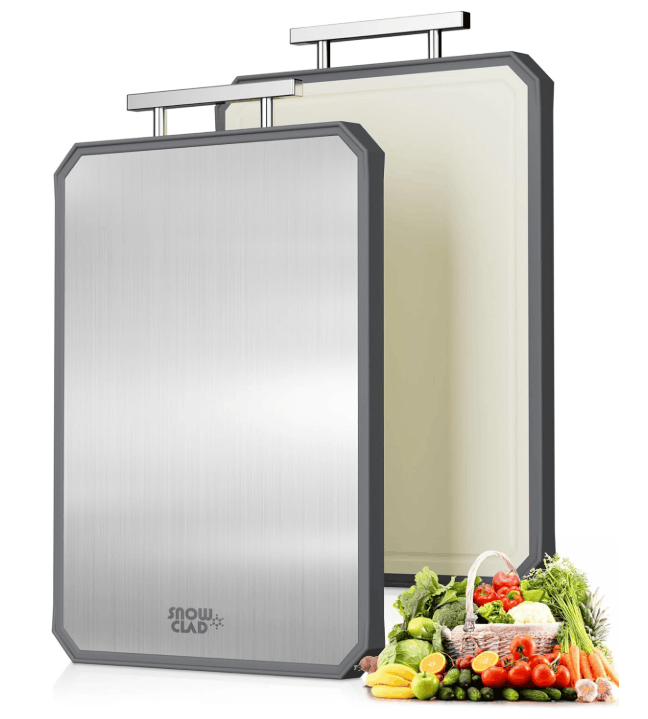
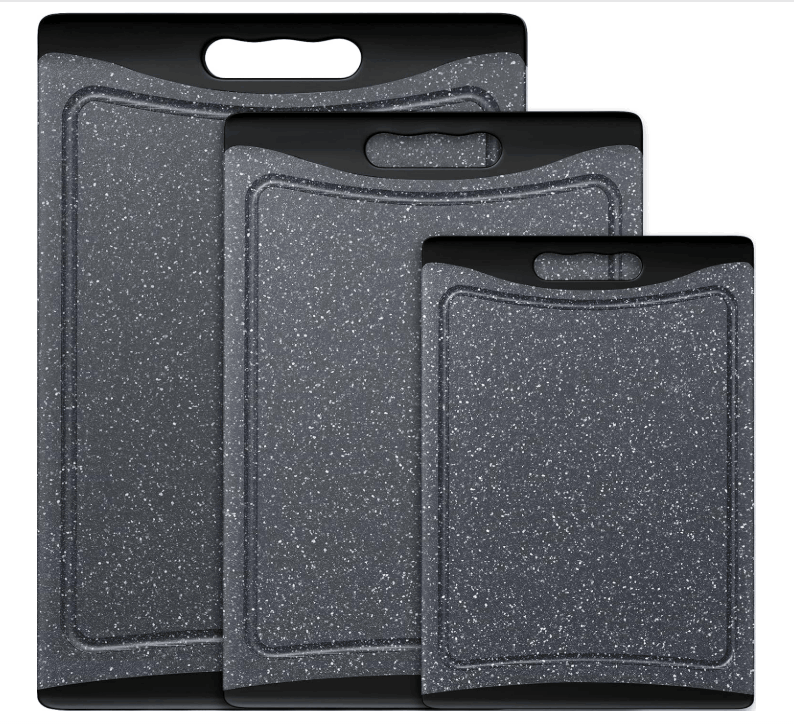
Plastic has some practical advantages. Its nonporous surface can be easier to clean, and some boards can go in the dishwasher. But plastic boards develop knife marks over time, and deep grooves can become difficult to clean properly.
They can also release plastic particles as we chop. That doesn’t automatically make them dangerous, but it’s something worth considering when choosing a board.
So, which would I choose?
Personally, I’d choose a good solid-wood board. I like the material, I prefer not to introduce plastic particles from my chopping surface, and the research hasn’t convinced me that wood is inherently less hygienic.
That’s my preference, though, rather than proof that wood is healthier overall.
Whichever material you choose, keeping the board clean and replacing it when it’s too worn to clean properly matters.
Are Wooden Cutting Boards Safe for Raw Chicken?
This matters to me because I often cut up a whole chicken when I’m making curry.
Both wood and plastic can be used for raw meat and poultry. What matters is preventing bacteria from spreading to other food and kitchen surfaces.
Here’s what i do in my kitchen:
- Use a separate board for raw chicken and other raw meats and different one for bread, salad or other ready-to-eat foods.
- Wash the board thoroughly with hot, soapy water after cutting the meat.
- Let the board dry thoroughly before putting it away.
If you use the same board for raw chicken and vegetables that will be cooked in the same curry, the risk is different from using that board for salad ingredients that will be eaten raw.
The key is to avoid transferring contamination to food that won’t receive further cooking.
And please don’t assume that a board is clean just because it looks clean.
My Wooden and Plastic Boards Have Both Started Chipping. Is That Normal?
I’ve had both wooden and plastic boards start to deteriorate. So neither material lasts forever.
Some surface marks are normal, but if pieces are coming away, the board is splitting or deep grooves are difficult to clean, I’d stop using it for food preparation and replace it.
A wooden board that’s simply rough may sometimes be reconditioned, provided it’s still structurally sound and the manufacturer allows it. But oil won’t fix a board that’s cracking or shedding pieces.
It’s worth checking your chopping boards regularly, especially if you use them often.
Would I Choose Wood Again?
Yes, I would.
I like wooden chopping boards, and the research hasn’t given me a reason to abandon them in favour of plastic. I also prefer not to introduce plastic particles from my chopping surface when there’s a practical alternative I like using.
But I’ve become more careful about what I buy. I want to know what the board is made from, whether its finish is suitable for food contact, and how to look after it properly.
And when it comes to preparing raw chicken, I’m just as concerned about cleaning, drying and preventing cross-contamination as I am about the material itself.
You don’t need the most expensive chopping board in the shop, or one that looks beautiful enough to display on your kitchen bench. You need one that’s suitable for food preparation, in good condition and easy enough for you to maintain.
For me, choosing safer cookware and kitchen essentials are more important then the brand or the price tag.
If you’re wondering how to care for your wooden board, I’ve also put together a guide on How to Clean a Wooden Cutting Board.
Sources
- USDA Meat and Poultry Hotline, cutting board guidance (wood or nonporous boards for raw meat; separate boards; hot soapy water; 1 tablespoon unscented bleach per gallon; replace worn or grooved boards): https://www.fsis.usda.gov/es/node/3305
- University of California Agriculture and Natural Resources, “Cutting Boards – Food Safety”: https://ucanr.edu/sites/MFPOC/Food_Safety/Cutting_Boards_-_Food_Safety
- University of Wisconsin Extension, “How Safe is Your Cutting Board?”: https://winnebago.extension.wisc.edu/2020/06/08/how-safe-is-your-cutting-board
- de Oliveira JP et al. (2025), “Handling practices and microbiological assessment of wooden and plastic cutting boards in domestic kitchens,” LWT 221: Science direct
- Microplastics from chopping, Environmental Science & Technology (2023). American Chemical Society press summary: https://www.acs.org/pressroom/presspacs/2023/june/cutting-boards-can-produce-microparticles-when-chopping-veggies.html
Interesting! I always thought wooden cutting boards were great for anything more dry but any meat or moist on plastic!
I learned something new today! I love it when research makes us look at everyday habits in a different way and challenges assumptions we’ve held for years. The comparison between wood and plastic was fascinating. Thank you for such an informative and well-balanced post!
Thanks for the great article. I was wondering if I should get my son a wood or plastic cutting board and I think I’ll go with wood. It’s so much nice and now i know what to look out for.
I’ve used both kinds of cutting boards. I favor my wooden boards. I dunno why just my go-to. This was great info and makes me more aware. I’m continuing to use my wooden boards.
Totally agree with you, wooden chopping boards only. I have had one for many years, and recently was gifted a beautiful piece of olive wood, and made two new cutting boards.