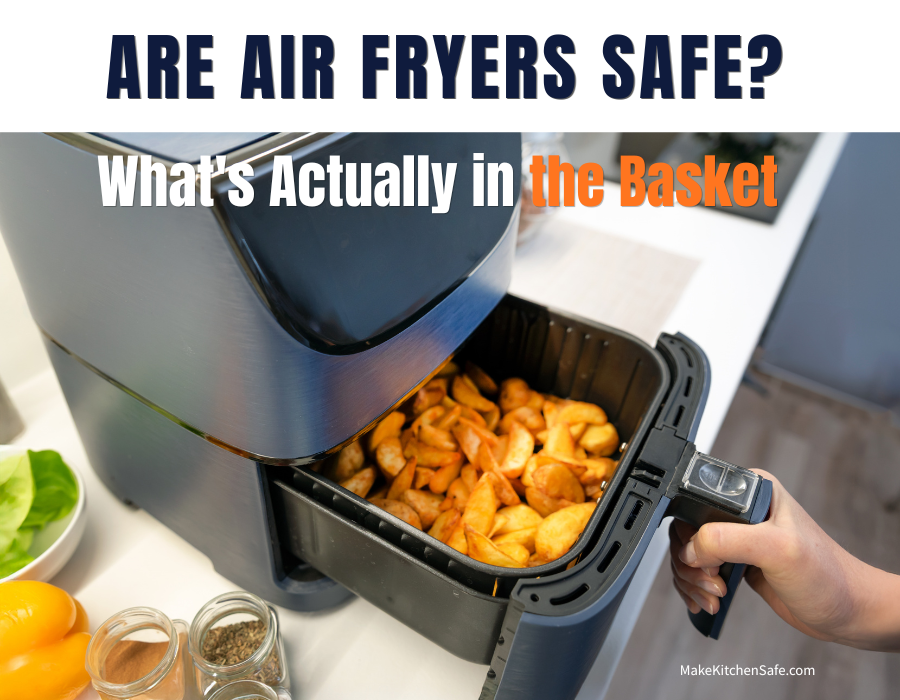
My air fryer is probably one of the most-used appliances in my kitchen.
I’ve stopped frying things like chicken nuggets and fries in a pan because the air fryer is so much easier to use, and I can cook them with little or no added oil.
But because I use it so often, I eventually had to ask myself something I probably should have asked much earlier:
What am I actually cooking my food on?
For me, my family’s health is the most important thing. So I don’t just want an appliance that cooks conveniently. I want to know what is actually touching our food every time we use it.
And that’s when I started looking more closely at air fryer baskets.
Because “air fryer” tells us how the appliance cooks but it doesn’t tell us what the cooking surface is made from.
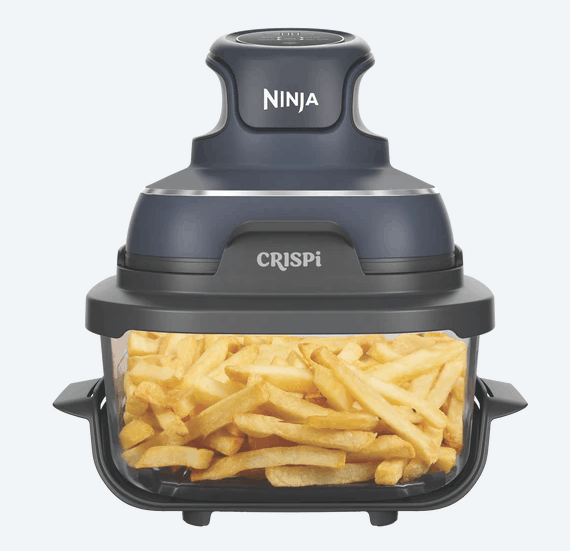
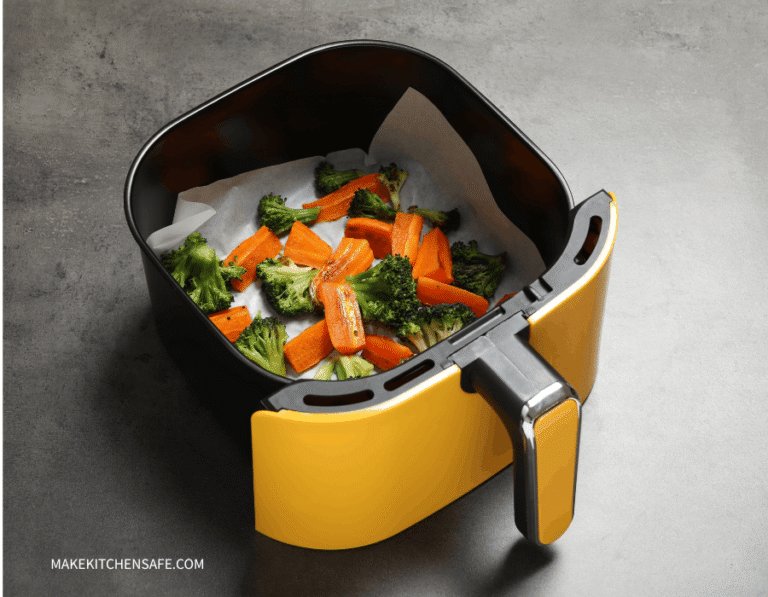
Depending on the model, that surface could be PTFE, a ceramic-style coating, stainless steel or even glass.
Once you know what’s actually in the basket, the question “are air fryers safe?” becomes much easier to answer.
What’s Actually in an Air Fryer Basket?
Before we talk about whether air fryers are safe, we need to look at the surface that actually comes into contact with your food.
Most air fryer baskets fall into a few broad categories.
PTFE-coated baskets
PTFE is one of the most common non-stick coatings used in air fryers. You may know it better by the brand name Teflon.
It is a fluoropolymer that falls within the broad PFAS family of chemicals. PTFE is popular for a reason: it creates a very effective non-stick surface and can handle normal cooking temperatures when used according to the manufacturer’s instructions.
The question isn’t simply “Is PTFE safe or unsafe?”
It’s how hot is it getting, how is the appliance being used, and is the coating still in good condition?
Ceramic-style coatings
Ceramic-style non-stick coatings are often marketed as a PFAS-free alternative to PTFE.
They can be a good option if you want to avoid PTFE and PFAS, but there’s one thing I would always check before buying:
Don’t assume “ceramic” automatically means PFAS-free.
Look for the manufacturer’s actual statement about the coating rather than relying on the word ceramic on the front of the box.
If you’re wondering is a ceramic air fryer safe, that’s the question I’d start with: what exactly is the coating made from?
Stainless steel and glass
Then there are air fryers and baskets that use bare stainless steel or glass instead of a non-stick coating.
For me, this is the simplest option from a materials point of view.
There’s no non-stick coating sitting between your food and the cooking surface, so there’s one less material to investigate or worry about wearing over time.
Of course, stainless steel and glass have their own practical considerations. Food can stick more easily to uncoated surfaces, and glass needs to be handled with the usual care you’d expect from glass cookware.
But if you’re trying to keep the number of materials in contact with your food to a minimum, they’re worth considering.
Are Air Fryers Safe if the Basket Is PTFE-Coated?
This is where I’ll be more cautious.
PTFE is a type of fluoropolymer used to create a non-stick surface. It is part of the broader PFAS family, and while PTFE can be used safely within its intended temperature range, I personally don’t make it my first choice for an appliance I use regularly at high temperatures.
Because PTFE can begin to break down when it is severely overheated, and the risk increases as temperatures get higher.
An air fryer is designed to cook with hot circulating air, so I would rather choose a basket that doesn’t rely on a PTFE coating in the first place.
That doesn’t mean you need to panic if you already own a PTFE-coated air fryer. Follow the manufacturer’s temperature instructions, don’t deliberately overheat an empty basket, and replace it if the coating becomes badly damaged or starts to deteriorate.
And if you’re looking for a new air fryer, I’ve put together the air fryers I’d actually consider for a safer kitchen including what I like about the cooking surface and what I’d want you to know before buying.
What about preheating an empty air fryer?
This is one reason I wouldn’t deliberately run a PTFE-coated basket empty at high temperatures for longer than necessary.
Food contains water and absorbs heat. An empty cooking surface can heat differently, particularly when you’re dealing with a small appliance producing concentrated heat.
So if your air fryer’s instructions don’t require an empty preheat, I don’t see much reason to make a habit of it.
What about grease buildup?
This one is more straightforward.
Old grease and food residue can smoke and burn at high temperatures. Keeping the basket clean is good kitchen practice regardless of what the basket is made from.
And if the coating itself is damaged, peeling or badly scratched, I’d replace the basket rather than continuing to use it.
What about overcrowding?
Air fryers need airflow to do their job properly.
Overloading the basket doesn’t just give you soggy chips. It can interfere with the circulation of hot air and give you uneven cooking.
So there’s another good reason not to pile the basket higher than your manufacturer’s instructions recommend.
Is a Ceramic Air Fryer Safe?
If you’re trying to avoid PTFE and PFAS, a genuine PFAS-free ceramic-style coating can be an appealing option.
But I don’t think “ceramic” should automatically win the safety competition.
The important question is what is actually in the coating?
Some products use terms such as “ceramic non-stick” or “ceramic coating” without giving shoppers much useful information about the underlying materials.
That’s why I like manufacturers who are willing to clearly explain what their cooking surface is made from and what they don’t use.
There is also a practical trade-off.
Ceramic-style non-stick coatings generally don’t have the same long-term durability as good-quality PTFE coatings. Their non-stick performance can gradually decline with use, particularly if the surface is repeatedly exposed to high heat, harsh cleaning or abrasive utensils.
That’s not necessarily a safety problem. It simply means you shouldn’t buy a ceramic-coated air fryer expecting the coating to perform exactly the same way forever.
Stainless Steel and Glass: The Simpler Option
If your biggest concern is the coating itself, bare stainless steel or glass makes the decision much simpler.
There’s no non-stick coating to investigate.
That doesn’t automatically make every stainless steel or glass air fryer “safer” in every possible respect. The appliance is still made from multiple components, and the cooking surface is only one part of the product.
But when it comes to the surface touching your food, fewer coatings can mean fewer questions.
The trade-off is convenience.
Food may stick more easily, and you may need a little oil or a different cooking technique to get the result you’re used to from non-stick.
Personally, I think that’s a reasonable trade-off for some people.
It’s really about deciding what matters most to you.
Are Air Fryers Dishwasher Safe?
This one has a much less exciting answer:
It depends on the air fryer.
If you’re searching are air fryers dishwasher safe, don’t assume the answer is yes just because the basket looks like it could survive a dishwasher.
Check your particular model’s instructions.
PTFE and ceramic-coated baskets are often labelled dishwasher-safe, but even when the manufacturer allows it, I personally prefer hand washing coated cooking surfaces.
Why? because dishwasher detergent, heat and repeated washing can be harder on a non-stick coating than gentle hand washing.
It’s not that one dishwasher cycle is going to destroy your basket. It’s about what happens after hundreds of cycles.
Stainless steel and glass are generally much less complicated from a cleaning perspective because there isn’t a non-stick coating to protect.
If you want your coated basket to last as long as possible, gentle hand washing is a habit I’m happy to recommend.

What to Look for in a Non-Toxic Air Fryer
If you’ve been searching for a non toxic air fryer, I’d actually start by ignoring that phrase.
Why?
Because “non-toxic” is a broad marketing term. It doesn’t tell you exactly what the cooking surface is made from.
Instead, I would look at these things.
1. What material actually touches your food?
This is my first question.
Don’t stop at “non-stick.” Non-stick tells you what the surface does. It doesn’t tell you what the surface is made from.
Look for specific information about PTFE, PFAS, ceramic-style coatings, stainless steel or glass.
If you have non-stick basket and cannot replace the air fryer yet then I would suggest you to use the safe air fryer basket liners to avoid the contact with the food.
2. Does the manufacturer clearly explain the coating?
A company that openly explains what its cooking surface is made from makes my job as a shopper much easier.
If the information is vague, I’d keep looking.
3. Is there independent testing or documentation?
If a manufacturer provides independent laboratory testing or detailed material documentation, that’s useful information.
It’s much more meaningful to me than a big “healthy” or “non-toxic” badge on the packaging.
4. How will you actually use it?
This matters more than people sometimes realise.
If you know you’re going to use an appliance several times a week, wash it constantly and cook at high temperatures, think about whether the cooking surface is suitable for that kind of use or look for alternative options like oven.
And if you already know you don’t want a PFAS-based non-stick coating in your kitchen, don’t talk yourself into one just because the appliance has great reviews.
There are other options. Remember why you cooking on air fryer on the first place – for the sake of healthy right ?
5. Don’t forget the rest of the appliance
The basket gets most of the attention because it’s where your food sits.
But an air fryer is an appliance, not just a basket.
If I’m researching one to recommend, I want to know as much as possible about the materials used in the cooking area and any coatings or surfaces that could come into contact with food.
That’s why I don’t like choosing kitchen products based purely on convenience.
So, Are Air Fryers Safe?
In most cases, yes, an air fryer isn’t inherently an unsafe appliance.
But “air fryer” isn’t a material.
One model may have a PTFE-coated basket. Another may use a ceramic-style coating. Another may give you stainless steel or glass.
That’s a pretty big difference when you’re trying to decide what you want in your kitchen.
If you already have a PTFE-coated air fryer and it’s in good condition, I wouldn’t panic. Use it within the manufacturer’s temperature guidelines, don’t deliberately overheat it, keep it clean and replace the basket if the coating becomes badly damaged.
If you’re buying a new one, I’d pay much more attention to what the food actually touches than to the words “healthy”, “non-toxic” or “ceramic” printed on the box.
That’s really the point of all my research here at Make Kitchen Safe.
I’m not interested in telling you that one material is automatically terrible and another is automatically perfect.
I want to know what we’re actually cooking on, what the evidence says, and whether the trade-offs make sense for a normal kitchen.
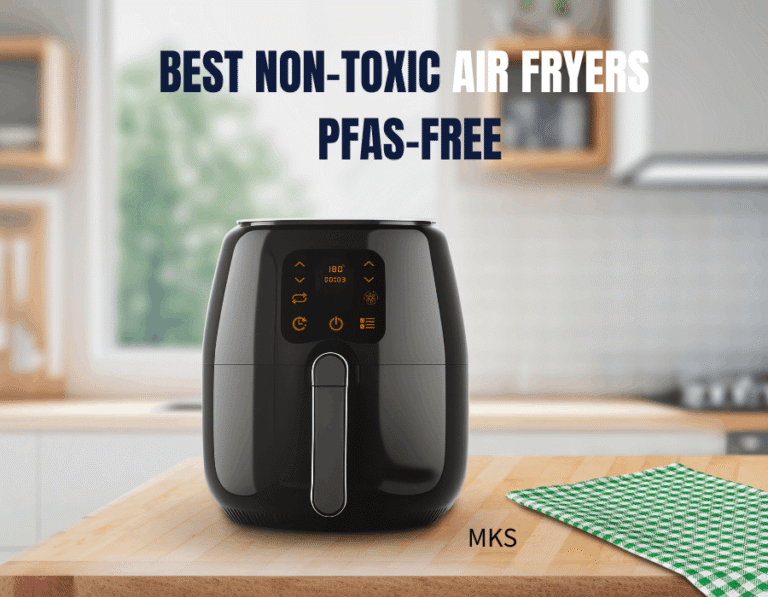
I found these 5 air fryers that I would happily buy for my family.
I use my air fryer often, and I honestly never gave much thought to what the basket itself was made from. This was really informative, especially the reminder to pay attention to damaged or scratched coatings. It definitely gives me something to check the next time I’m shopping for an air fryer.
I threw my air fryer away because of the ptfes! I’m going to have to check out the glass ones. I’ve missed having an air fryer in the kitchen.
Lots of great things to think about. We try our best to use products that are ptfe, pfas and pfoa free. We have a blue & gold macaw so we have to be careful with anything non stick/Teflon.